
Trump, Xi to emphasize stability at high-stakes summit with major crypto mining implications
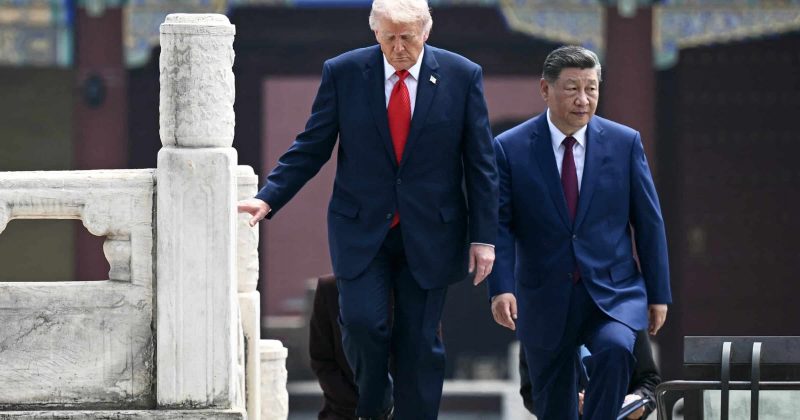
President Donald Trump and Chinese President Xi Jinping are set to meet Thursday in Beijing for a summit that both sides are framing around one word: stability. The two largest economies have spent months locked in an escalating fight over trade, rare earth minerals, AI dominance, and now, the reopening of the Strait of Hormuz.
For crypto markets, the substance of this meeting matters more than the optics. China’s stranglehold on rare earth minerals, the materials essential for manufacturing GPUs and ASIC mining rigs, means that whatever comes out of this summit could directly affect the cost of mining Bitcoin for years to come.
The rare earth problem crypto can’t ignore
China dominates the refining process for rare earth minerals, controlling roughly 85% of global refined rare earth output. Those refined materials end up in the magnets inside GPUs and ASIC miners, the workhorses of both AI training and Bitcoin mining. When China has previously restricted rare earth exports during geopolitical disputes, mining rig prices have jumped by as much as 25%.
The US is walking into this summit with a clear goal: secure predictable licensing and export commitments for rare earth minerals. Washington wants to prevent the kind of supply shocks that have previously rippled through hardware markets and, by extension, into Bitcoin’s hash rate economics.

The tariff clock is ticking
The summit also marks the beginning of a critical six-month negotiation window. The US-China tariff framework established in the Busan truce earlier in 2026 expires on November 10. Whatever goodwill the two leaders project on Thursday needs to translate into a successor agreement before that deadline.
US Trade Representative Greer has emphasized that the American side is focused on tariff continuity and supply security, particularly for the rare earth minerals that feed both the semiconductor and mining hardware pipelines.
The two sides appear to define “stability” in very different ways. A US official has described the American vision as a “low but durable floor” from which to build leverage. Xi’s team, meanwhile, views the stability conversation as an opportunity to diminish US dominance in global economic architecture.
The Iran wildcard and energy costs
Trump is also expected to push Xi on an entirely separate front: pressuring Tehran to reopen the Strait of Hormuz. China imports roughly 1.2 million barrels per day of Iranian crude oil, giving Beijing significant influence over Tehran’s economic calculus. The roughly 20% of global oil supply that transits through that narrow waterway makes it a choke point that affects everything from industrial electricity rates to the cost of cooling a mining facility in Texas.
What crypto investors should actually watch
Any signal that rare earth exports will be restricted or weaponized further should be treated as a negative catalyst for mining stocks and, eventually, for network hash rate growth. When hardware costs are predictable, miners can plan capital expenditure cycles with confidence.
The November 10 tariff expiration date is the next concrete milestone to track. China’s dominance in rare earth refining has been pushing US policymakers toward domestic alternatives for years. Companies working on rare earth processing outside China, whether in Australia, Canada, or the US itself, stand to benefit from the geopolitical anxiety regardless of the summit’s outcome.