

Roblox brings AI into the Studio to speed up game creation
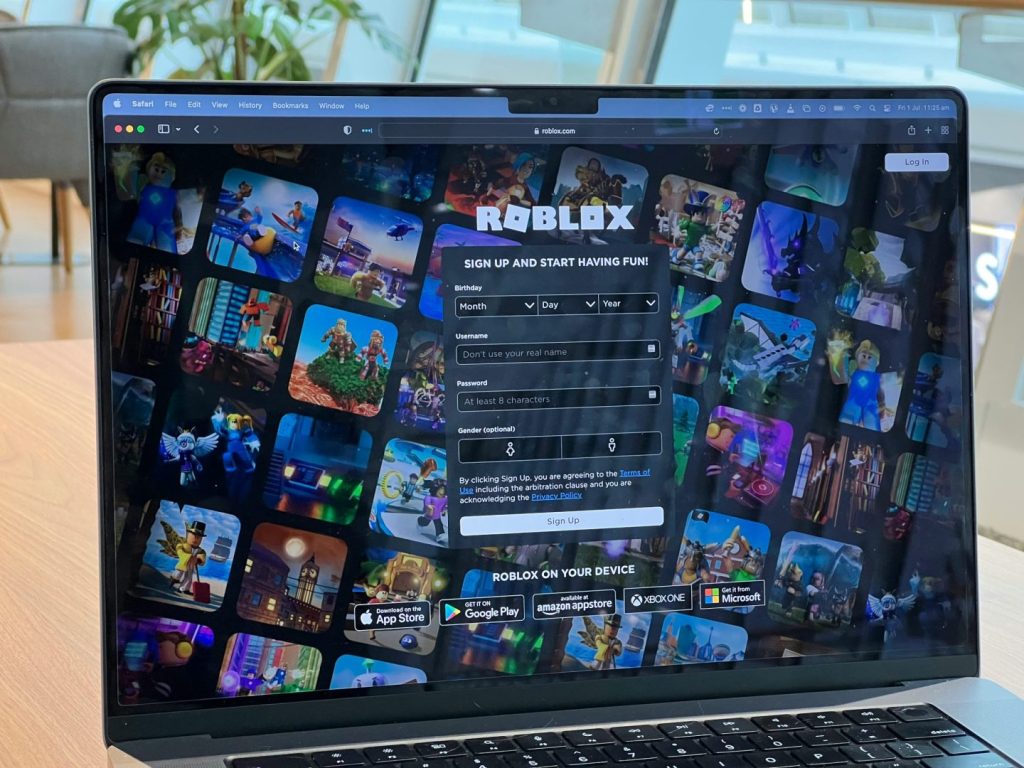
Roblox is often seen as a games platform, but its day-to-day reality looks closer to a production studio. Small teams release new experiences on a rolling basis and then monetise them at scale. That pace creates two persistent problems: time lost to repeatable production work, and friction when moving outputs between tools. Roblox’s 2025 updates point to how AI can reduce both, without drifting away from clear business outcomes.
Roblox keeps AI where the work happens
Rather than pushing creators toward separate AI products, Roblox has embedded AI inside Roblox Studio, the environment where creators already build, test, and iterate. In its September 2025 RDC update, Roblox outlined “AI tools and an Assistant” designed to improve creator productivity, with an emphasis on small teams. Its annual economic impact report adds that Studio features such as Avatar Auto-Setup and Assistant already include “new AI capabilities” to “accelerate content creation”.
The language matters—Roblox frames AI in terms of cycle time and output, not abstract claims about transformation or innovation. That framing makes it easier to judge whether the tools are doing their job.
One of the more practical updates focuses on asset creation. Roblox described an AI capability that goes beyond static generation, allowing creators to produce “fully functional objects” from a prompt. The initial rollout covers selected vehicle and weapons categories, returning interactive assets that can be extended inside Studio.

This addresses a common bottleneck where drafting an idea is rarely the slow part; turning it into something that behaves correctly inside a live system is. By narrowing that gap, Roblox reduces the time spent translating concepts into working components.
The company also highlighted language tools delivered through APIs, including Text-to-Speech, Speech-to-Text, and real-time voice chat translation across multiple languages. These features lower the effort required to localise content and reach broader audiences. Similar tooling plays a role in training and support in other industries.
Roblox treats AI as connective tissue between tools
Roblox also put emphasis on how tools connect to one another. Its RDC post describes integrating the Model Context Protocol (MCP) into Studio’s Assistant, allowing creators to coordinate multi-step work across third-party tools that support MCP. Roblox points to practical examples, such as designing a UI in Figma or generating a skybox elsewhere, then importing the result directly into Studio.
This matters because many AI initiatives slow down at the workflow level. Teams spend time copying outputs, fixing formats, or reworking assets that do not quite fit. Orchestration reduces that overhead by turning AI into a bridge between tools, rather than another destination in the process.
Linking productivity to revenue
Roblox ties these workflow gains directly to economics. In its RDC post, the company reported that creators earned over $1 billion through its Developer Exchange programme over the past year, and it set a goal for 10% of gaming content revenue to flow through its ecosystem. It also announced an increased exchange rate so creators “earn 8.5% more” when converting Robux into cash.
The economic impact report makes the connection explicit. Alongside AI upgrades in Studio, Roblox highlights monetisation tools such as price optimisation and regional pricing. Even outside a marketplace model, the takeaway is clear: when AI productivity is paired with a financial lever, teams are more likely to treat new tooling as part of core operations rather than an experiment.
Roblox uses operational AI to scale safety systems
While creative tools attract attention, operational AI often determines whether growth is sustainable. In November 2025, Roblox published a technical post on its PII Classifier, an AI model used to detect attempts to share personal information in chat. Roblox reports handling an average of 6.1 billion chat messages per day, and says the classifier has been in production since late 2024, with a reported 98% recall on an internal test set at a 1% false positive rate.
This is a quieter form of efficiency. Automation at this level reduces the need for manual review and supports consistent policy enforcement, which helps prevent scale from becoming a liability.
What carries across, and what several patterns stand out:
Put AI where decisions are already made. Roblox focuses on the build-and-review loop, rather than inserting a separate AI step.Reduce tool friction early. Orchestration matters because it cuts down on context switching and rework.Tie AI to something measurable. Creation speed is linked to monetisation and payout incentives.Keep adapting the system. Roblox describes ongoing updates to address new adversarial behaviour in safety models.
Roblox’s tools will not translate directly to every sector. The underlying approach will. AI tends to pay for itself when it shortens the path from intent to usable output, and when that output is clearly connected to real economic value.
(Photo by Oberon Copeland @veryinformed.com)
See also: Mining business learnings for AI deployment
Want to learn more about AI and big data from industry leaders? Check out AI & Big Data Expo taking place in Amsterdam, California, and London. The comprehensive event is part of TechEx and is co-located with other leading technology events, click here for more information.
AI News is powered by TechForge Media. Explore other upcoming enterprise technology events and webinars here.