
Governance and data readiness enable the agentic enterprise

While the prospect of AI acting as a digital co-worker dominated the day one agenda at the co-located AI & Big Data Expo and Intelligent Automation Conference, the technical sessions focused on the infrastructure to make it work.
A primary topic on the exhibition floor was the progression from passive automation to “agentic” systems. These tools reason, plan, and execute tasks rather than following rigid scripts. Amal Makwana from Citi detailed how these systems act across enterprise workflows. This capability separates them from earlier robotic process automation (RPA).
Scott Ivell and Ire Adewolu of DeepL described this development as closing the “automation gap”. They argued that agentic AI functions as a digital co-worker rather than a simple tool. Real value is unlocked by reducing the distance between intent and execution. Brian Halpin from SS&C Blue Prism noted that organisations typically must master standard automation before they can deploy agentic AI.
This change requires governance frameworks capable of handling non-deterministic outcomes. Steve Holyer of Informatica, alongside speakers from MuleSoft and Salesforce, argued that architecting these systems requires strict oversight. A governance layer must control how agents access and utilise data to prevent operational failure.

Data quality blocks deployment
The output of an autonomous system relies on the quality of its input. Andreas Krause from SAP stated that AI fails without trusted, connected enterprise data. For GenAI to function in a corporate context, it must access data that is both accurate and contextually-relevant.
Meni Meller of Gigaspaces addressed the technical challenge of “hallucinations” in LLMs. He advocated for the use of eRAG (retrieval-augmented generation) combined with semantic layers to fix data access issues. This approach allows models to retrieve factual enterprise data in real-time.
Storage and analysis also present challenges. A panel featuring representatives from Equifax, British Gas, and Centrica discussed the necessity of cloud-native, real-time analytics. For these organisations, competitive advantage comes from the ability to execute analytics strategies that are scalable and immediate.
Physical safety and observability
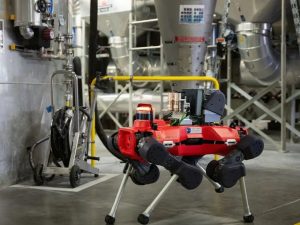
The integration of AI extends into physical environments, introducing safety risks that differ from software failures. A panel including Edith-Clare Hall from ARIA and Matthew Howard from IEEE RAS examined how embodied AI is deployed in factories, offices, and public spaces. Safety protocols must be established before robots interact with humans.
Perla Maiolino from the Oxford Robotics Institute provided a technical perspective on this challenge. Her research into Time-of-Flight (ToF) sensors and electronic skin aims to give robots both self-awareness and environmental awareness. For industries such as manufacturing and logistics, these integrated perception systems prevent accidents.
In software development, observability remains a parallel concern. Yulia Samoylova from Datadog highlighted how AI changes the way teams build and troubleshoot software. As systems become more autonomous, the ability to observe their internal state and reasoning processes becomes necessary for reliability.
Infrastructure and adoption barriers
Implementation demands reliable infrastructure and a receptive culture. Julian Skeels from Expereo argued that networks must be designed specifically for AI workloads. This involves building sovereign, secure, and “always-on” network fabrics capable of handling high throughput.
Of course, the human element remains unpredictable. Paul Fermor from IBM Automation warned that traditional automation thinking often underestimates the complexity of AI adoption. He termed this the “illusion of AI readiness”. Jena Miller reinforced this point, noting that strategies must be human-centred to ensure adoption. If the workforce does not trust the tools, the technology yields no return.
Ravi Jay from Sanofi suggested that leaders need to ask operational and ethical questions early on in the process. Success depends on deciding where to build proprietary solutions versus where to buy established platforms.
The sessions from day one of the co-located events indicate that, while technology is moving toward autonomous agents, deployment requires a solid data foundation.
CIOs should focus on establishing data governance frameworks that support retrieval-augmented generation. Network infrastructure must be evaluated to ensure it supports the latency requirements of agentic workloads. Finally, cultural adoption strategies must run parallel to technical implementation.
Want to learn more about AI and big data from industry leaders? Check out AI & Big Data Expo taking place in Amsterdam, California, and London. The comprehensive event is part of TechEx and is co-located with other leading technology events including the Cyber Security & Cloud Expo. Click here for more information.
AI News is powered by TechForge Media. Explore other upcoming enterprise technology events and webinars here.