
Solana Readies Quantum Defense With 3-Step Roadmap and Falcon Implementation
Key Takeaways:
Anza and Firedancer independently selected the Falcon post-quantum signature scheme for Solana, with code on Github. Blueshift’s Solana Winternitz Vault has been live for over 2 years and was cited by Google Quantum AI in 2025. Solana’s 3-step quantum roadmap can activate quickly when needed, with no meaningful performance impact expected.
Solana Ecosystem Runs 2-Year Quantum-Safe Vault as Falcon Gains Developer Backing
Quantum computing poses a long-term risk to the cryptographic systems that blockchains depend on. At a sufficient scale, quantum machines could break the digital signature schemes that secure wallets and transactions. For most networks, that risk remains theoretical. In a blog post published Monday, Solana said it is treating it as an engineering problem worth solving now.
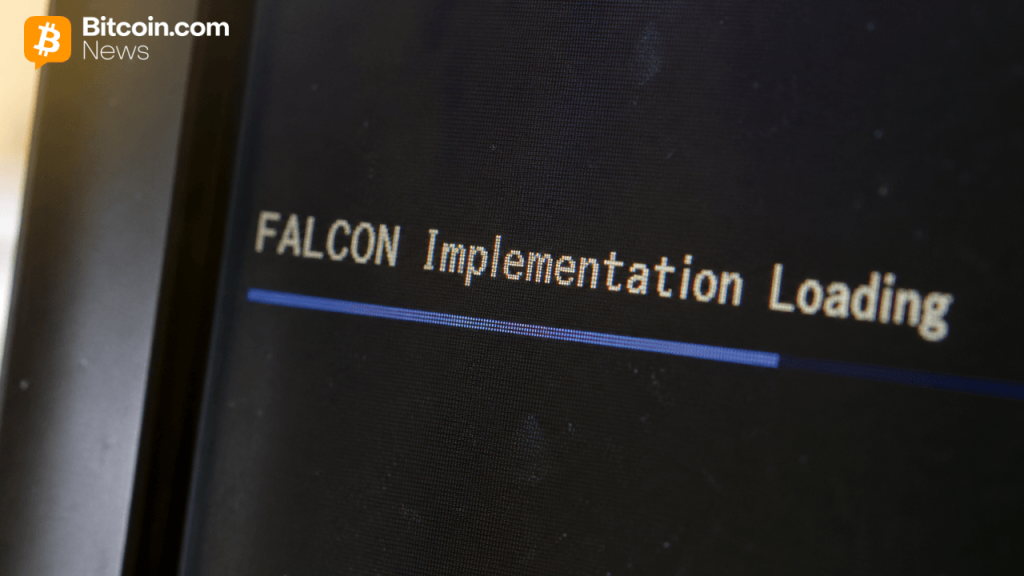
Anza and Firedancer, two of Solana‘s validator client developers, have each studied post-quantum migration paths independently. Both teams arrived at the same conclusion: Solana needs a post-quantum digital signature scheme with compact signatures built for high-throughput use. Both teams identified Falcon as the solution.

Working separately, Anza and Firedancer published their research and built initial Falcon implementations. The code is publicly available on both the Firedancer Github and the Anza Github repositories for review and testing.
The convergence matters. When two independent teams reach the same answer without coordinating, it signals that the research is grounded. Falcon is not a preliminary pick. It is the result of parallel analysis by developers who run a significant portion of Solana’s stake.
No migration is required today. Solana’s current cryptographic setup does not face an immediate quantum threat. The work being done now is preparation, not emergency response. If and when quantum computing reaches the level required to threaten blockchain security, Solana has a clear path ready to deploy.
The network’s quantum roadmap follows three stages. First, research continues with ongoing evaluation of Falcon and its alternatives. Second, if quantum becomes a credible threat, new wallets shift to a post-quantum scheme. Third, existing wallets migrate to the selected scheme. Network performance is not expected to take a meaningful hit during any stage of that transition.
The Solana ecosystem has also built quantum-resistant tools already in active use. Blueshift’s Solana Winternitz Vault has provided a direct post-quantum path for more than two years and is one of the few quantum-resistant primitives deployed on any major blockchain today.
Google Quantum AI cited Blueshift’s Winternitz Vault directly in a white paper published earlier this year, naming it a leading example of proactive post-quantum work in the industry. That external recognition adds weight to what Solana developers have been building quietly for years.
The Solana Foundation has not set a timeline for activating any post-quantum migration. The current posture is to watch, research, and maintain readiness without making changes the network does not yet need.
What distinguishes Solana’s position is not urgency but alignment. Two separate developer teams, working independently, reached the same answer, built the same tool, and published it. The ecosystem has working quantum-resistant primitives already in production. The research is done. The code exists.
When the quantum threat moves from theoretical to credible, Solana’s response does not start from scratch. It starts from a tested codebase and a team that has already done the work.