
The Bitcoin CME gap is dead – and past gaps could close forever in May this year

CME Group has spent most of its life as the financial plumbing moving the gears behind wheat hedges, rate bets, equity futures, the quiet machinery that keeps risk moving. Now it is taking a very public step into crypto’s always-on world.
On May 29, CME says it will launch 24/7 trading for its cryptocurrency futures and options on the CME Globex platform, starting at 4:00 p.m. CT, pending regulatory review.
That sounds like an operational update, the kind that usually lands with a shrug. In Bitcoin land, it touches one of the longest running storylines in chart watching culture, the so-called CME gap.
Bitcoin trades every hour of every day, it never sleeps. CME’s Bitcoin futures, by design, have had set trading hours, historically running from Sunday evening through Friday afternoon, with closures that leave a clean break between the last print and the next session’s open.

The weekend is where the biggest discontinuity can show up on the futures chart.
When Bitcoin moves during the weekend, the futures market is frozen in time. When the futures market reopens, it “catches up” in a single leap, leaving a blank space on the chart between Friday’s last trade and Sunday’s first trade.
That blank space, “The CME Gap,” becomes a target, a magnet, a meme, a reason to stay up late refreshing a chart, a reason to take a small trade and feel like you are part of an inside joke. Though, in reality, most CME gaps do eventually fill.
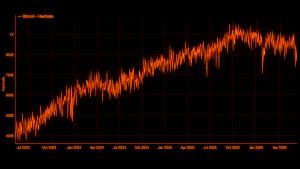
As of press time, there is still one open around $60,000… as well as one above around $85,000.
CME going 24/7 changes the shape of that story.
The chart gap has always been tied to the simple reality of a market closing while the underlying keeps moving. With continuous trading, that weekend jump loses its main stage.
CME is framing the shift as a response to demand, and it is backing that up with scale. The exchange says its crypto futures and options saw more than $3 trillion in notional volume in 2025, and it highlights 2026 year-to-date activity with average daily volume of 407,200 contracts, up 46% year over year, alongside average daily open interest of 335,400, up 7% year over year.
Those numbers matter because the CME gap narrative has always carried an implied second act, the idea that CME futures are where serious money shows its hand.
As CME’s crypto products grow, the futures tape becomes harder to dismiss as “just a chart.” CME itself has been building that case in its own publications, including its quarterly crypto insights, which reiterate the market’s growth and institutional participation.
The gap gets smaller, and more contained
Here is the detail that keeps this from being a simple funeral for the gap.
CME says 24/7 trading will still include “at least a two-hour weekly maintenance period over the weekend,” a line tucked into the same announcement that celebrates always-on access.
A scheduled outage is a different animal from a two day weekend shutdown, and the difference is important.
The old gap has been big enough to build folklore around, a wide open space that can contain a meaningful move.
A two hour window is tighter, and it will usually capture less price action. Yet in markets, small windows can still matter, especially if they are predictable.
If trading is thin around maintenance, if volatility hits at the wrong moment, if liquidity providers step back for any reason, the market can still reopen with a jump. The gap becomes less like a canyon and more like a crack, and cracks still catch ankles if you are running.
The key here is to look at the way rituals adapt. Traders love rituals because rituals turn uncertainty into a routine.
Weekend gap talk has been one of those routines, part superstition, part pattern recognition, part community bonding. A world with 24/7 CME trading presses that ritual into a smaller, more technical shape.
It also changes who has to stay awake.
The people who made careers around the weekend close and reopen rhythm may find themselves looking at Sunday night the way they look at any other hour, and they may shift their attention to the maintenance period, to weekend liquidity, to how spreads behave when fewer participants are around.
Meanwhile, the institutions CME is courting can manage risk on their own clock, with fewer forced waits until the bell rings.

The bigger story is always-on finance, and the cost of keeping it running
CME’s move lands in a broader moment, where “always on” is spreading from crypto into the expectations of traditional markets.
Crypto traders grew up in a world where price can change at 3 a.m. on a Saturday because a headline dropped somewhere in the world, a liquidation cascade hit, or a whale decided to move coins. A regulated derivatives exchange expanding access is another step toward meeting that world on its own terms.
At the same time, always-on markets raise the stakes on operational reliability. When there is less downtime, the downtime that remains matters more.
CME has had to deal with that reality in recent history. There was a significant CME outage in November 2025 tied to data center cooling issues.
That history matters for crypto because traders tend to treat outages as forced volatility events. A maintenance window is planned, an outage is chaos, and both create discontinuities. If the “gap” is ultimately about discontinuities, then the real evolution is a shift from a weekend shaped discontinuity to a maintenance and resilience shaped one.
There is also a cross market angle here that goes beyond Bitcoin culture. When a big venue like CME keeps crypto derivatives open all weekend, it tightens the link between crypto and the rest of the risk universe.
Macro headlines do not respect trading schedules, geopolitics does not wait for Monday, policy chatter hits when it hits. Continuous trading makes it easier for the futures curve to adjust in real time, and that can change how basis, hedges, and risk overlays behave.
CME’s move is already being treated as a meaningful market structure event in mainstream finance coverage. Bloomberg wrote about CME moving closer to 24/7 crypto derivatives trading, framing it as another sign of institutional demand and infrastructure adaptation.

So, is this the death of the CME gap?
If you define the CME gap as the classic weekend void, the one everyone points to after a big Saturday move, then May 29 looks like the date where that specific artifact loses its reason to exist.
CME is offering continuous access, and it is doing it for products that have become central to institutional crypto trading.
If you define the CME gap as a broader habit of treating CME’s chart as a map of delayed information, then the habit will likely evolve instead of disappearing.
Markets find new seams. The weekly maintenance period becomes one, and any operational incident does too. The storyline shifts from a two day drama to a smaller, repeated, more technical moment.
The more interesting question for the next few months is how much trading actually shows up when the weekend becomes just another session.
A 24/7 sign on the door is one thing, a busy room is another. CME’s own growth metrics suggest strong participation overall, and the first weekends after May 29 will show whether that participation wants to be awake.
For traders who grew up with the gap as a comforting myth, the change may feel like losing a landmark. For everyone else, it is one more sign that crypto is becoming a normal part of the financial system’s plumbing, with all the benefits and responsibilities that come with it.
And for the chart watchers, the ones who love a clean story you can draw with two horizontal lines, the hunt continues. The gap has always been a way of saying, “something happened while you weren’t looking.” In a market that never stops, that sentence still applies, it just points to different moments.