

Bitcoin Difficulty Drops 3.3% As Miners Pull Back Hashrate

On-chain data shows the Bitcoin mining Difficulty has seen a downward adjustment following the decline in the network Hashrate.
Bitcoin Blockchain Has Eased Mining Difficulty
According to data from CoinWarz, the Bitcoin mining Difficulty has gone through a decline in the latest network adjustment. The “Difficulty” here refers to a metric built into the blockchain that controls how hard miners would find it to discover a block.

The indicator’s value automatically changes roughly every two weeks in events called adjustments, based on how miners performed since the last such event. The blockchain follows one simple rule to adjust the Difficulty: miner blockchain production rate should converge to 10 minutes per block.
If miners find the average block in an interval greater than 10 minutes, then the network responds by raising its Difficulty just enough that these validators are slowed back down to the standard rate. On the other hand, this cohort performing slower than needed forces the blockchain to ease things up.
The latest Bitcoin Difficulty adjustment occurred on Thursday, and as the below chart shows, it resulted in a decrease for the metric.
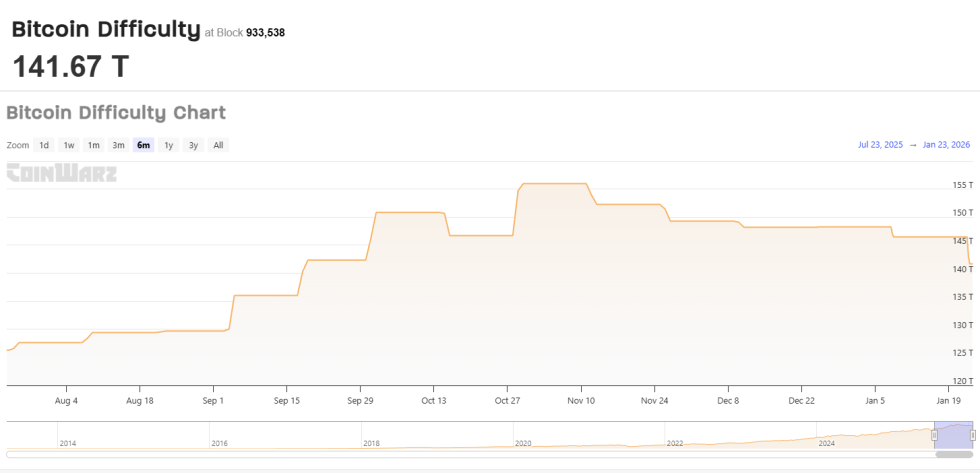
How the BTC Difficulty has changed over the last six months | Source: CoinWarz
Prior to the change, the indicator had a value of 146.47 trillion hashes. Now, it has dropped to 141.67 trillion hashes, indicating a decrease of 3.28%. This is the second-consecutive reduction in the network Difficulty.
In fact, the indicator has been in a long-term decline since November, with five of the six Difficulty changes that have occurred in the period leading to a drop in its value. Even the one adjustment that didn’t lead to a decrease in the metric had an almost neutral effect, so while the decline didn’t strengthen during it, it didn’t correspond to a change of direction either.
The reason for this long drawdown in the Bitcoin Difficulty lies in the trend witnessed by the Hashrate, a measure of the total amount of computing power connected by the miners to the network.
As data from Blockchain.com shows, the 7-day average value of the Hashrate has been going down during the last few months.
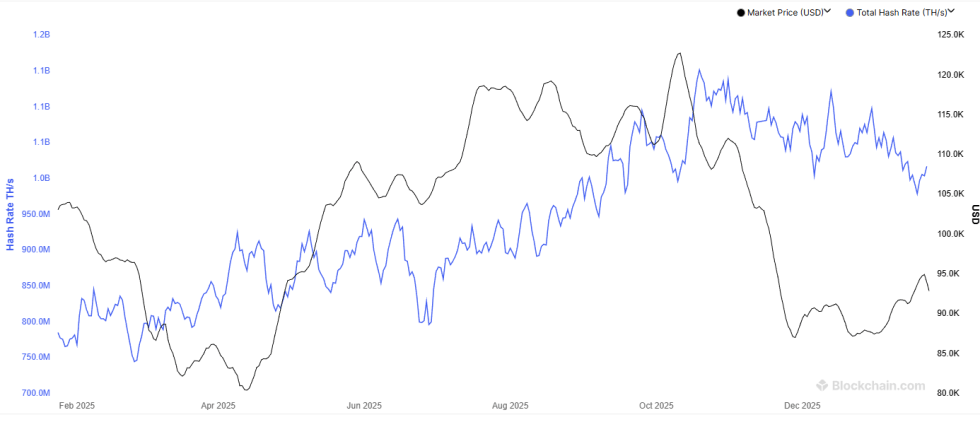
The trend in the 7-day average value of the BTC Hashrate during the past year | Source: Blockchain.com
On January 18th, the 7-day average Bitcoin Hashrate fell to 978.8 exahashes per second (EH/s), its lowest level since the first half of September. The indicator has observed a rebound since this low, but its value still remains notably lower than earlier in the month.
Miners’ pace tends to directly correlate with the amount of computing power that they possess, so a decline in the Hashrate usually results in a correction for the Difficulty. The continued downtrend in the former since October is why the latter has also plunged.
BTC Price
At the time of writing, Bitcoin is trading around $90,000, down more than 5% over the last week.
Looks like the price of the coin has gone down recently | Source: BTCUSDT on TradingView
Featured image from Dall-E, chart from TradingView.com

Editorial Process for bitcoinist is centered on delivering thoroughly researched, accurate, and unbiased content. We uphold strict sourcing standards, and each page undergoes diligent review by our team of top technology experts and seasoned editors. This process ensures the integrity, relevance, and value of our content for our readers.